First time I’d kayaked on a river. That’s not quite true – I’d done plenty of it in the harbour and where the rivers met the sea, and pushed upriver a couple of times. Nothing like this though.

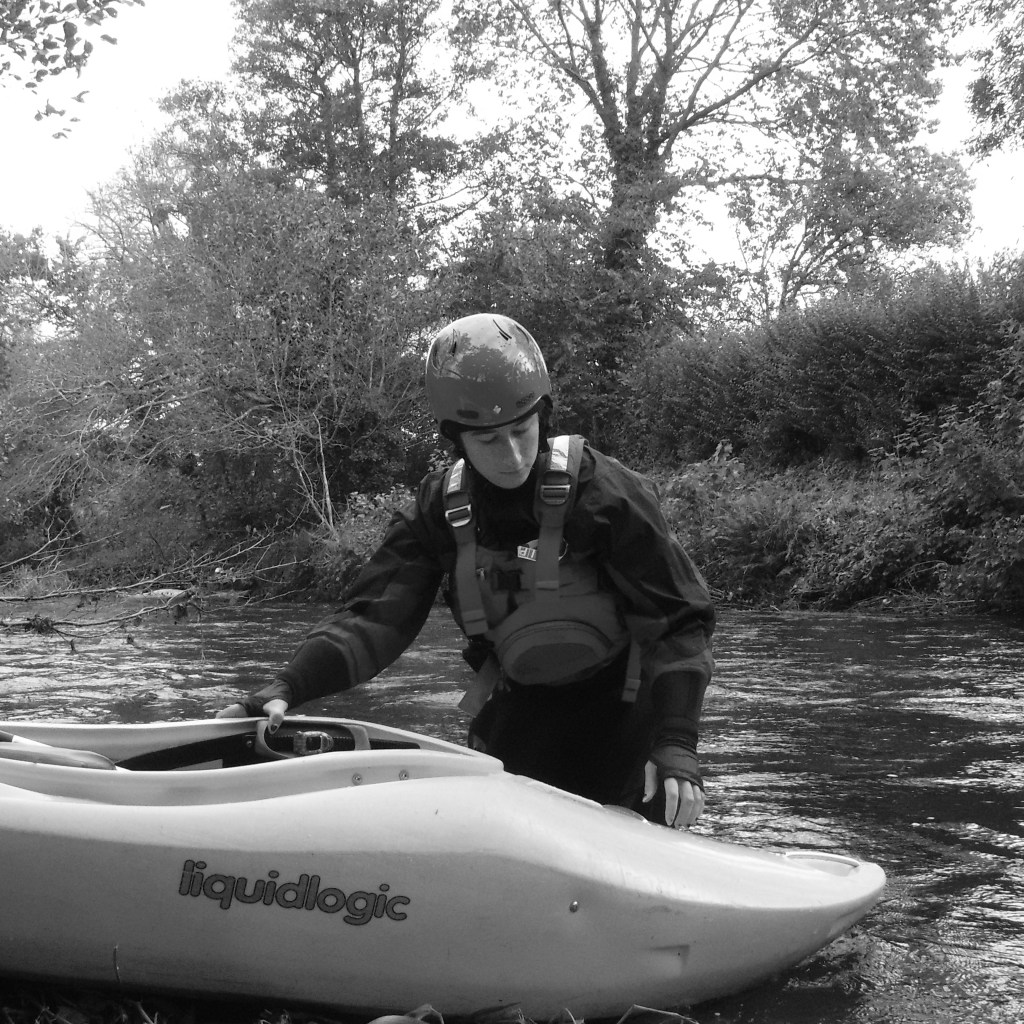
Start at the boathouse – that is, after all, where we keep the boats. Drag them from the racks, carry them into the light onto the rain-washed gravel, the red and the yellow, the green and the blue, the names to conjour with – Zet, Piranha, Liquid Logic. Meanwhile, drag on the costume – wetsuit, spray top, buoyancy aid, helmet. Don’t forget the paddle – as I said at the time a kayak without a paddle will do you marginally more good than a paddle without a kayak. Standing atop a rock outside the boathouse a first year does penguin impressions. Pile kayaks onto cars. Pile kayakers into cars. Begin driving.

Park. Remove kayaks from roofs, look both ways before carting them across the road and laying them on the verge. After due consideration heft the kayak to the shoulder, grab the paddle with your free hand and join the single file along the roadside to the gate. Pass kayak over, hurdle after it, resume your carry down the track to where the waters run swift.
Swift to me that is. Oldest of heads, greyest of beards, least experienced of paddlers. Listen to the safety brief, watch the first paddlers test the waters then drag the kayak into position, insert self into position, snap spraydeck around cockpit coaming. Jolt the kayak forward until the slope of the bank shoots you downward toward the water.

In. Water rushes across the forward deck as I point the nose left with the flow, bump over the weir and spin right into a bankside eddy to await the arrival of everyone else. With the bow pointing upstream I warp my left hand around a clump of vegetation and use the right to unzip my camera from the pocket of my vest and shoot my fellow club members as they repeat my manouver, generally with rather more grace.
All together, we drift down. The river’s full after the recent rains, tall grass and vegetation show partially submerged where they’ve been submerged. Every tree hangs its branches low across the flow which insists on dragging me through each spray of twigs – lean forward and headbutt your way through. Follow the line of plastic helmets above plastic craft against the dark background of riverside forestry. Go west old man. Watch out for the shallows.

And soon enough, a pause. Leader yells us all over to the bank. Slight issue with a fallen tree blocking the river. We pull ourselves out, we pull the boats out, we cart them along the bankside while the folks up front try to find somewhere to put back in. It’s a decent size tree – an oak – and it’s fallen straight across from one bank to the other. What’s interesting is that it’s happened since yesterday – the club committee ran this route less than twenty hours ago to make sure it was clear. Then last night the wind blew. Did it make a sound in this empty forest I wonder? It certainly made a hell of a mess.
People scramble down banks. From up top I have the unusual sight of a kayak perched amid the branches of a tree. One by one we get back onto the water, paddle across to regroup, then we’re off again.
At some point – don’t ask me when – we buddy up, new guys following the more experienced, and I’m following one of the club’s senior members. Advice abounds – watch the water, careful of the flow, don’t let the current drag you to the outside of river bends. The river changes fast – placid and easy to drift down one minute, the next it’s demanding all your attention. Through branches, under bridges. Banks and branches and vegetation flash past. Another yell from up front, another tree down.

Less time to react now. Cut across the current to the bank, miss the obvious place to stop, and three of us wind up grabbing onto the same branch waiting to be hauled out of the current. Back out, drag the kayaks up the bank. Options are explored. Lines are produced, kayaks are lowered back down into the current. Knee deep in water while we get everything pointed the right way – a kayak floating high and empty on the flow is an awkward thing to climb into.
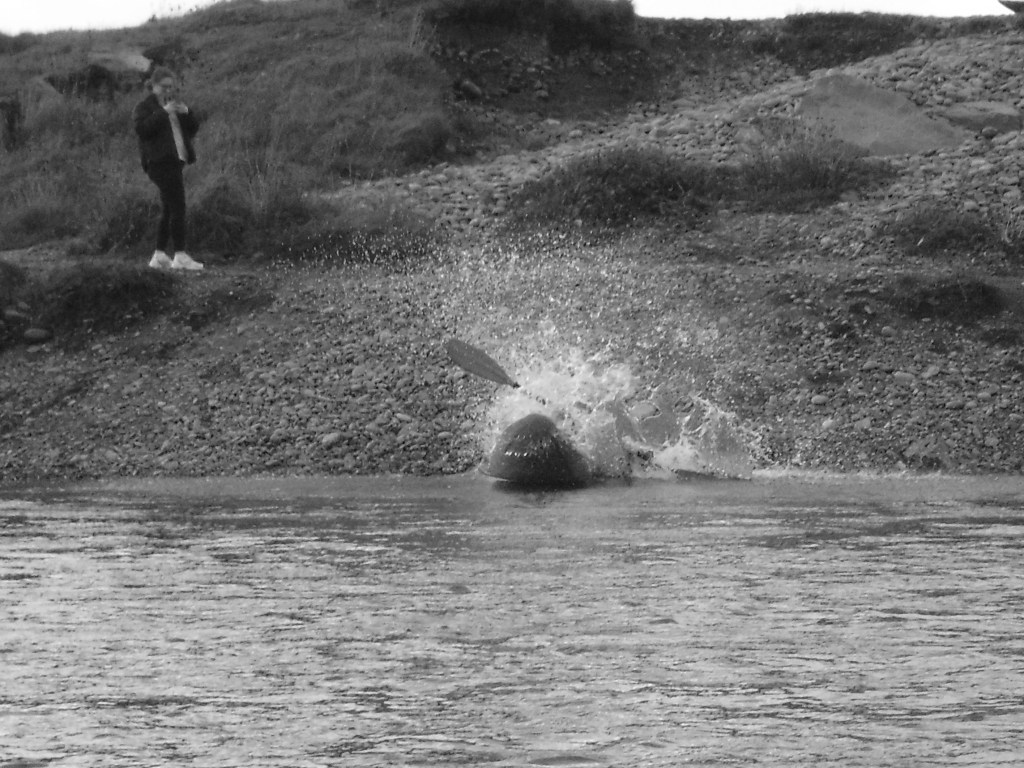
Keep on downstream. The trees thin out, the river widens, and suddenly I’m seeing a familiar hillside, a familiar river. Haul out. Pause for a team photo. Climb back in, then toboggan down the bank into the stream. Last pull down river, under the last bridge and into the harbour. The wind’s getting up now, and there’s a low swell pushing in through the harbour mouth and through the waters of the harbour itself – after the river I greet it like an old friend – the sea’s rise and fall is something I’m used to.
Back out. Shoulder the kayak for the last time, and walk back to the boathouse – the long awkward shape on your shoulder is catching that onshore wind, making the load more awkward than it should be. Into the boathouse, heft the kayak vertical, slide it into its rack. Discover that the kayak on the other side of the rack isn’t strapped in, and it slides out taking its neighbour with it, which fall across the aisle into the opposite rack, some of the contents of which goes over and rebounds back into what’s facing it. Hollow plastic forms falling in a concrete box make a noise like a drum kit being kicked down a flight of stairs as I stand there and wonder quite how many of the dominoes might fall.
Fitting end really……

 Photos By Alex