The PHD continues. And yet again, I sit down to write about the travels that have been involved with it.
Which is something I do a lot. Both the travelling part, and the writing about it.
I’d say that’s something exclusively tied to this project, but it isn’t. Taking a read back through my blog entries, almost since this thing began (2018 – what a different world that was), I’ve talked about travelling. About protests in different cities, about photographs taken from small boats, about motorbikes on deserted airfields. Travel appears to be something that I’ve made integral to more than just that project. A shrink would probably have something to say about that.
Let’s talk about something else. Let’s talk about my idea of seeing whether machines have souls. Lets talk about machines.
Well, machines I’ve been photographing. Big machines, Cold-War machines, flying machines that rent blue heaven with the thunder of their engines and now sit in museums pissing oil and hydraulic fluid over the floor like incontinent retired dinosaurs. The machines which are so beautiful in their design, construction and aesthetics that it’s hard sometimes to think that each and every one of them was conceived with the sole purpose of bringing fiery death to humankind.
But on this particular trip, I was looking at different machines. Still Cold-War creatures with a screaming death motif, but these are the creatures that crawl upon the land. Yes, summer was upon us, and I was off to see the war machines. To see the beasts upon their own terms, in their own habitat. Yes, I was going to Essex.
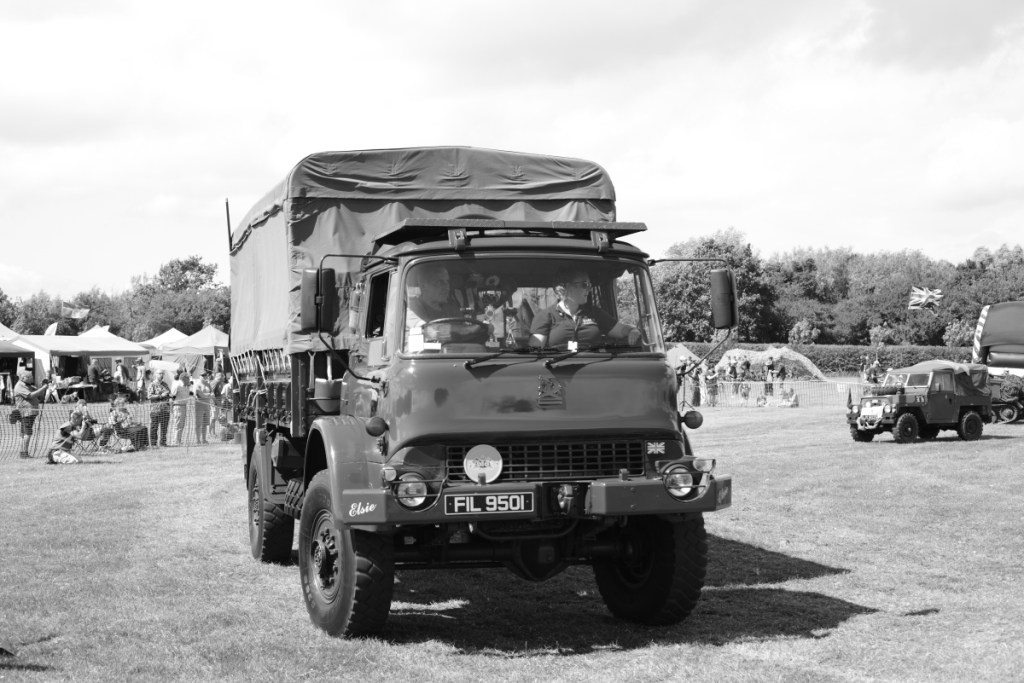
Bedford Four Tonner, Echoes of History, 2023If we’re going to be specific, I was off to Rettendon. I’d heard of the place – following a triple murder back in the 90s it’s become the village that launched a thousand gangster movies – but never been there. But a farm on the periphery was hosting the Echoes of History show for 2023, so along I went. It’s a lovely bit of the world – or at least the part I saw on the hike from Battlebridge station to White Horse Farm is nice enough, once you’ve crossed the dual carriageways (there are at least pavements – for a pedestrian in a motorised world, this will improve the landscape no end).
So, the show itself. Welcoming vibe, particularly when you consider that I arrived at the wrong entrance (again, when you don’t arrive by car motorised logic can be hard to fathom), and an absolutely lovely display of rolling hardware. I was glad to see the array of Cold War era hardware as well as the kit from WWII. That’s partly down to it being what I’m studying, but it’s good to see from a historic viewpoint as well. Humanity seems to be very good at starting to preserve things when it’s very nearly too late, and there are plentiful examples of things that weren’t preserved because they were so ubiquitous that nobody thought they’d ever need saving (ask a trainspotter how many steam trains were literally pulled out of the breakers yard, but make sure you have a long afternoon free to listen to the answer).
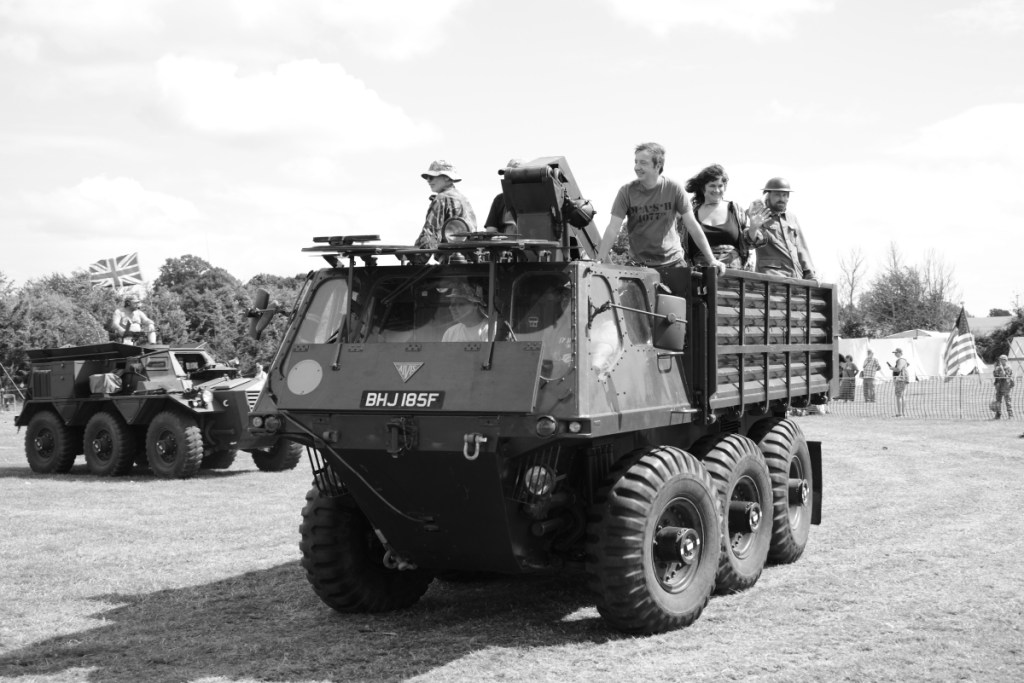
And so, into the arena rolled an Alvis Saracen APC. A Daimler Ferret scout car. An Alvis Stalwart. A Scorpion light tank. Plus Landrovers, Willys Jeeps, Bedford four-tonner trucks – all the things that go to make an army run.
All very awe inspiring, and a great photo opportunity. But what sticks in my mind is the conversations with the men who’d brought them along – mostly veterans who were preserving as a hobby what they’d once worked on for a living. Stories to tell abounded, along with pieces of kit on display – radios, sidearms, photograph boards showing the vehicles under restoration. Barn-find Landrovers, Green Goddesses (I vaguely remembered those from the fire brigade strikes in 2002) a Saxon APC. And the stories. If we’re going to talk about personifying these machines, or about the link between machine and man, then this is where it’s going to be found.
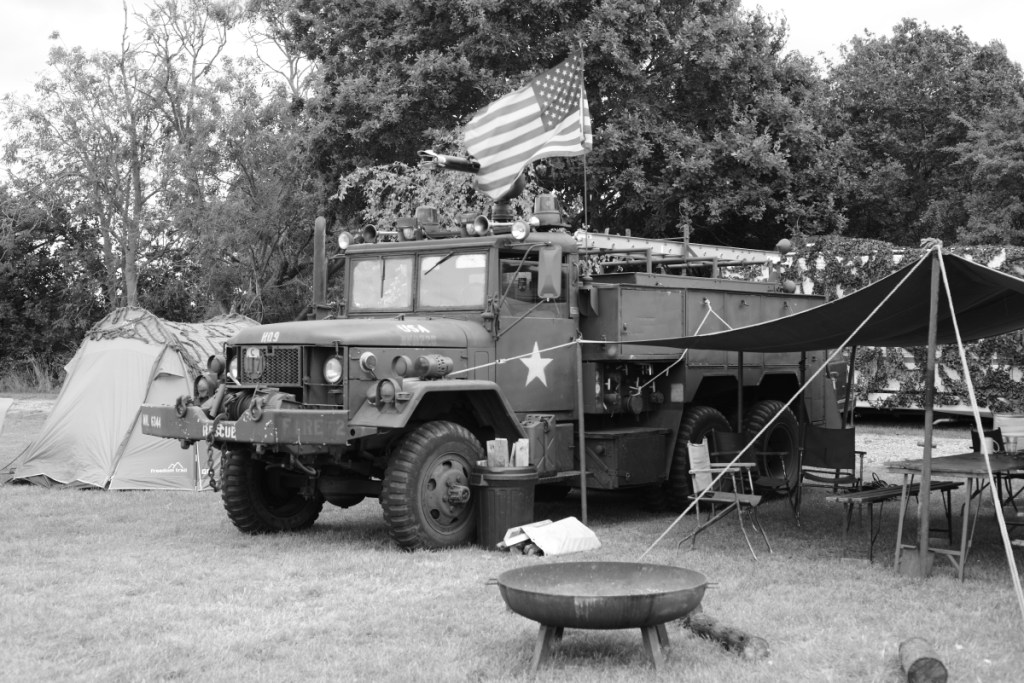
In military terms, it wasn’t just the last century that was represented. I spent some time speaking with men of the 44th (East Essex) Regiment of Foot, who’d dropped in from the early 1800s. Elsewhere in the field was the Old Western town of Spearfish Creek. And encamped next to the 44th Foot….
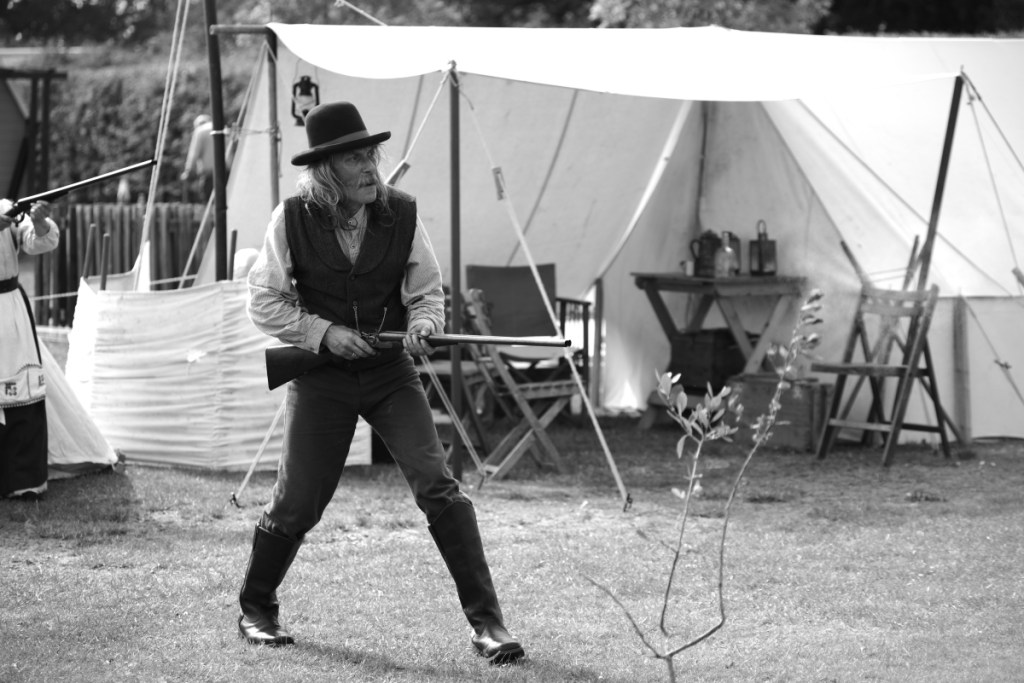
I was fully prepared for there to be Civil War re-enactors. However, if I’d been asked in advance, I’d have guessed that they would be people re-enacting the English Civil War (or the War of Three Kingdoms if you insist). Sealed knot, Cavaliers, Roundheads, pikemen, matchlock muskets and etc. But no – this was the US Civil War, the blue and the grey, Yankees v Johnny Reb. A little bit jarring perhaps, but for a photographer – well there was a lot more photography of the US Civil War than of the English. Maybe it’s a point about the universality of conflict, maybe the Sealed Knot was busy elsewhere. Who can say.

Takeaways from the weekend. I suppose the major one is that this sort of machinery is awesome on many levels, but then any eight year old could tell you that. I could say that I really want an Alvis Stalwart to get about in, but that’s not news either. I could tell you that a wonderful thing about an event largely patronised by ex-servicemen is that you’ll always find a half-pound burger with bacon and fried egg. All very true. Plus the fact that there isn’t a non-interesting area of history, but I suspect I knew that all along.

And a sneaking feeling that living history is something I’ll continue to examine……

 Photos By Alex