In February 2023, I returned to the PHD studies which I had suspended amidst the lockdowns of 2020. I returned to a world much changed, armed with fresh insights, and with a wholly new idea for the project I wished to pursue.
The warbirds project will form my photographic labour for the next two years – perhaps longer. I will build a portfolio of images that depict the resting places of Britain’s Cold-War airforce, whether that be in sheds or hangars, in national museums or volunteer run groups, polished up for airshows or lying in rusty neglect.
The purpose of this body of work is to try and show the link between the machines and the people whose lives have connected with them. Those people, who might be pilots or curators or volunteers, whose lives have crossed with these old warhorses. And as part of that, I want to answer the old question – do these machines have souls?
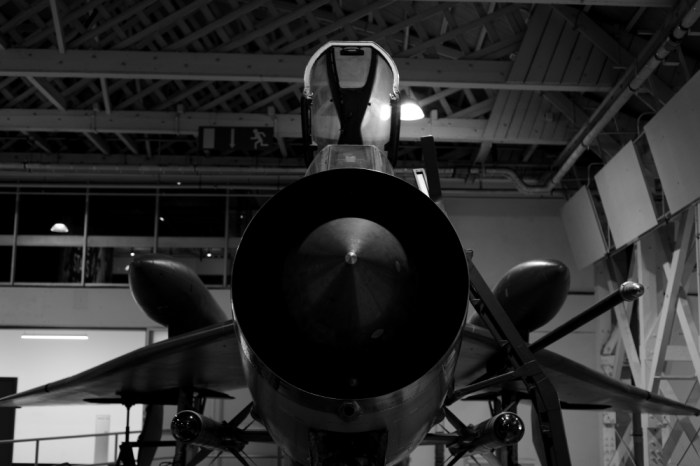
It’s a non-trivial question. Many people get very nostalgic about old planes, in the same way that others will about vintage motorbikes, classic cars, steam trains. Why is that? What is the connection? Is it the appreciation of superb engineering? Is it the rose-tinted glow of something that can be associated with a person’s own childhood? Is it the historic aspect? Is it the link that a pilot has with his machine, as a cavalryman might have had with his mount? For that matter we’ve always assigned names and personalities and a sense of life to ships – why should aircraft be any different? This, I shall seek to explore.
And the final question. Can we see these aircraft as memorials? Memorials abound to the those who served and fell during the two world wars. You can find memorials to Waterloo, to the Boer War, the Korean War – in more recent years memorials have been errected for those who went to the wars in Afghanistan and Iraq. But the Cold War doesn’t seem to get the same notice. Perhaps it’s because the Cold War never broke out. But still plenty of people spent a career serving in it, and took the risks that go with that – even in peace time the flying of fast jets is not a risk free activity. Are these aircraft a form of memorial?
So, that’s the plan. Here are the practicalities.
Item 1 – All aircraft depicted must have entered into or seen service between the years 1948 and 1991.
Item 2 – All aircraft will be photographed using monochrome film. These are not aircraft of the digital era, and I will not use digital technologies to depict them.
Item 3 – While the photograph will depcit the aircraft, it will also seek to depict its surroundings. Where it is, how it’s preserved, who is working on it.
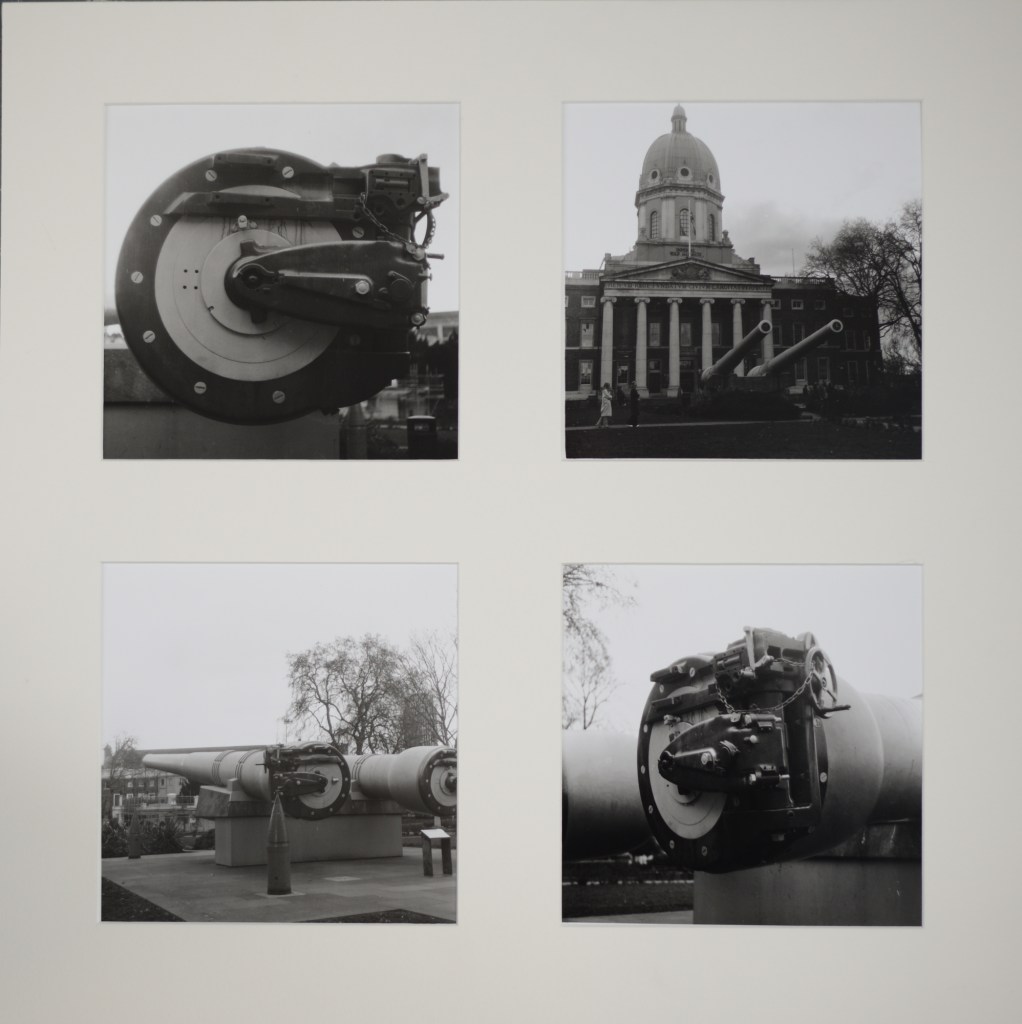
There you have it. That’s the project stripped down to its barest essentials. It will change in the making – projects always do. But there’s an aesthetic beauty to the things I wish to depict, and a link to our shared history, that lends me confidence in the work at hand. One early experiments is appended below – the guns of the battleships HMS Ramiles and HMS Resolution, guarding the front of the Imperial War Museum, London. Weapons of war, memorials of the past, part of the architecture, features of the landscape.
Let us see where this takes us.
 Photos By Alex