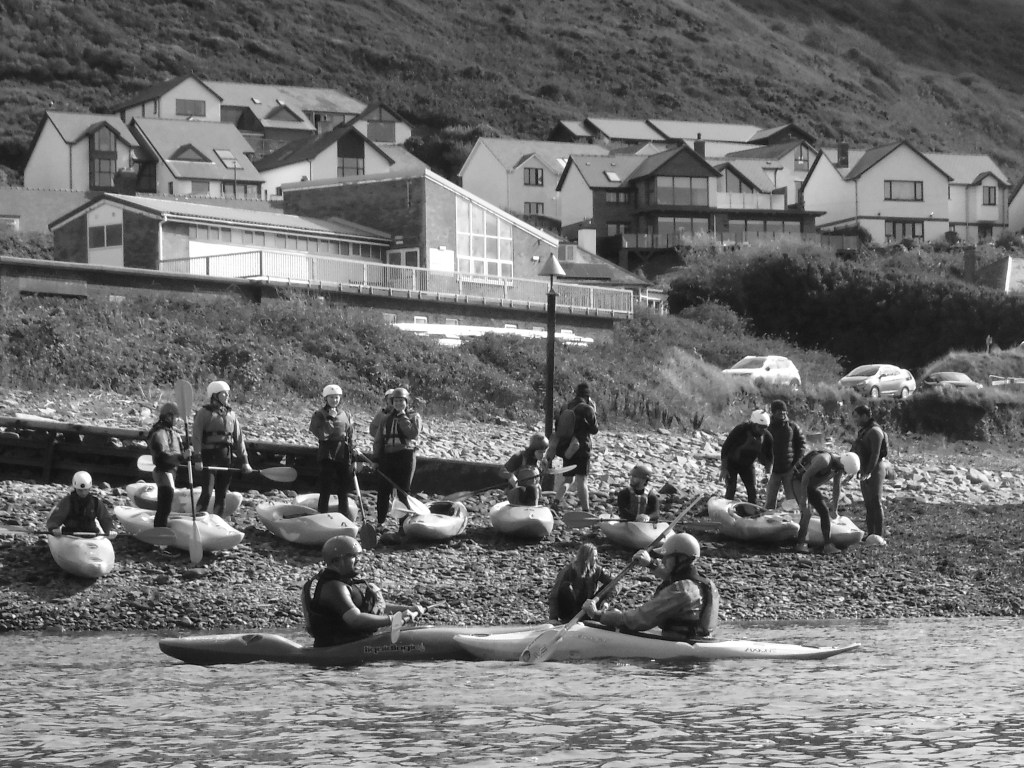
I’ve written before about dragging together my passion for photography and my time spent on the water, and I’ve written recently about kayak paddling – and illustrated that with photographs. It seemed fitting then to see if there were differences between the photography from rowing boats at sea and the photography from kayaks – inshore or off.
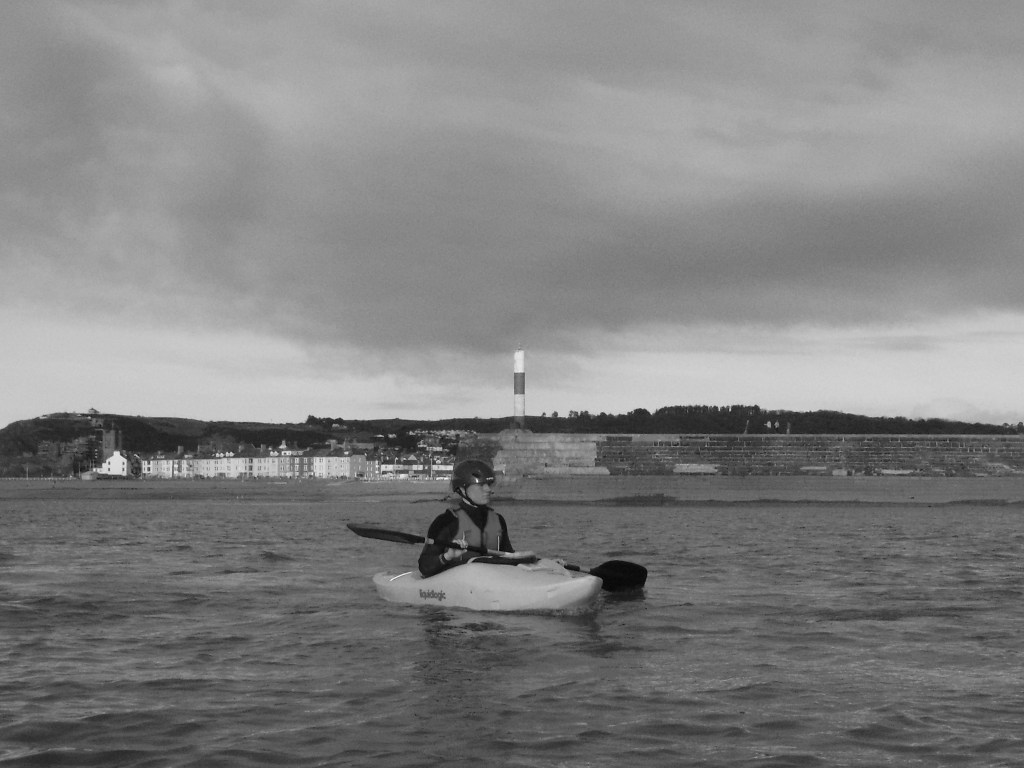
As before, equipment first.
The boat – I’m a tyro kayaker, who decided as a post-graduate to try a new hobby while there were still University clubs I could start them with. That’s why back in October 2023 I found myself in a kayak surrounded by impossibly young looking undergrads. I’d kayaked before, but at the level of renting one for an hour while camping someplace. It was going to be a back to school moment I thought. So it proved.
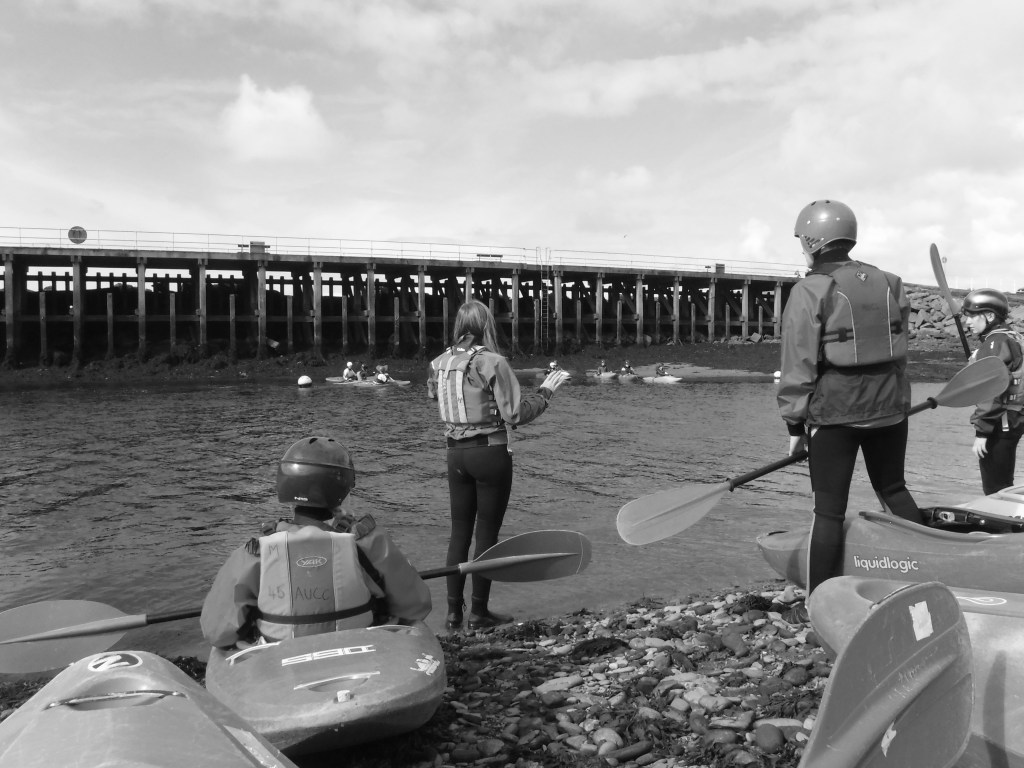
What was bizarre is that I knew – I know – the river and the harbour in which we took our first steps. I was forty yards as the otter swims from the launching slip that I’d been hauling Longboats up and down for three years (and still am). Everything was familiar except the boat.
The major differences? Legroom for a start. I’m not a massive individual, but a long-legged six footer folding himself into a kayak is a feat somewhere between yoga and origami. Sorted that out. And then the real difference – direction. A Longboat – long and pointy with a reasonably deep hull, and propelled by two hours per side all pulling at once – will tend to keep on in a straight line. Yes it will need steering, yes the tide flow and the wind will alter your direction, but you’d need to work really quite hard to make one spin through three hundred and sixty degrees without meaning to. Not so much with a kayak it turned out. That manouverability that allows them to shoot rapids and turn on a sixpence requires a lightness of touch and constant attention – not only to what you’re doing but to what the water’s doing.
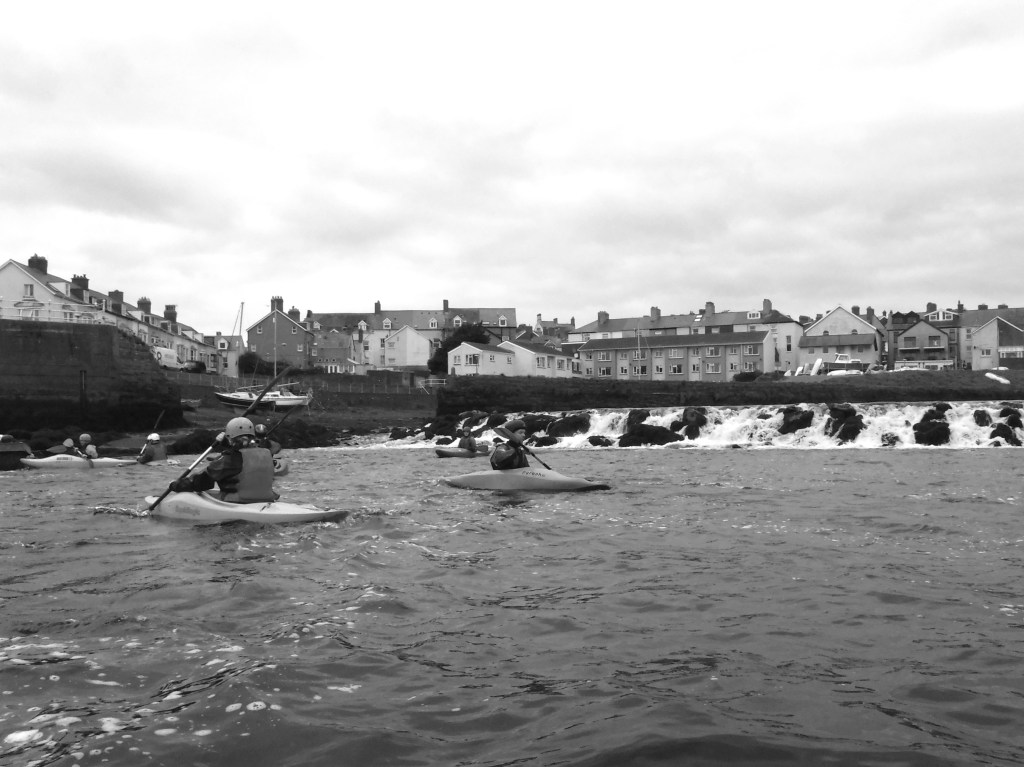
It’d take a few months for me to be even half competent – and I define that as having a decent chance of staying upright if the water’s rougher than glass. By anybody’s standards I’m still a beginner, and I’m probably held up by my reasons for kayaking. I don’t view it as something to push the edges of – I view it as a tool for seeing things that I’d never see otherwise. And that’s where the kayak scores over a longboat – if I see something interesting I don’t have to consult with four other people before I stop and have a look. Beyond that is my reason for most of this aquatic nonsense – the sea’s a wonderful cure for civilisation.
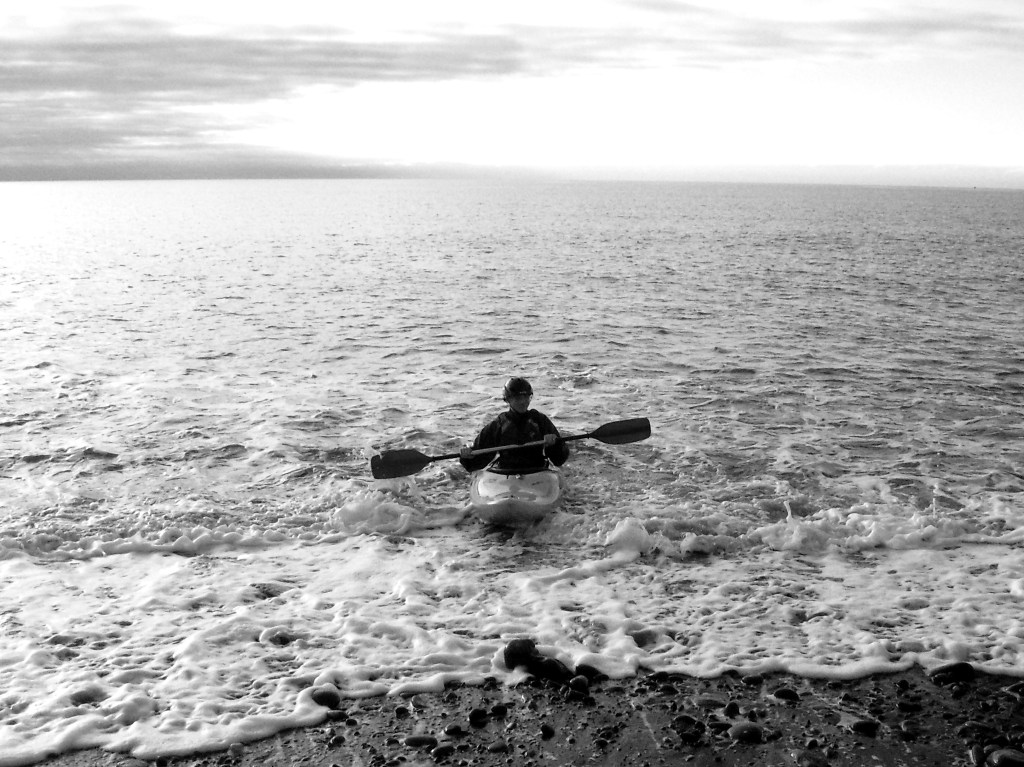
That’s the boat. For the interested, it’s usually the club’s Zet Raptor.
The camera? It’s a waterproof Fujifilm point and click unit which zips into the pocket on the front of my buoyancy aid (and if you’re choosing buoyancy aids, get one with that front pocket – it’s a game changer. I picked up a second hand Palm FXR a few months back, and can’t think how I managed without it). I’ve added a floating wrist strap against the day that the thing slips through my wet and chilled hands, bounces off the taut neoprene of the spray deck and vanishes into the dark waters of the River Ystwyth. It is what it is – there are only so many solutions on the market, and they’re mostly variations on this idea. There are a few things I’d like in my ideal camera for the job….
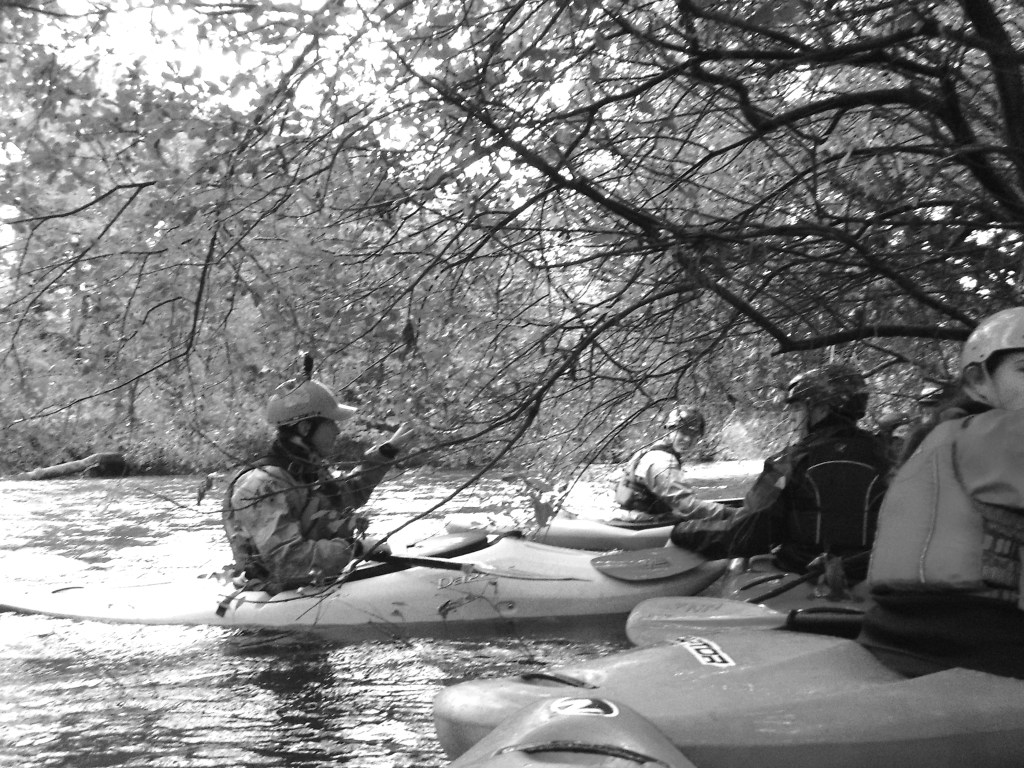
It must be waterproof of course, and the Fujifilm does a good job. But I would like a viewfinder – nothing I’ve found for sale has such a thing, and in strong sunlight composition on a screen isn’t always ideal. I’d like keys that can be worked with gloves on – winter is coming. I’d like a shutter priority mode – and there’s no reason I can think of that I can’t have that. Such a mode could be included at the software level if the makers wished. What I seem to be describing is essentially a Nikonos V with a digital sensor…..
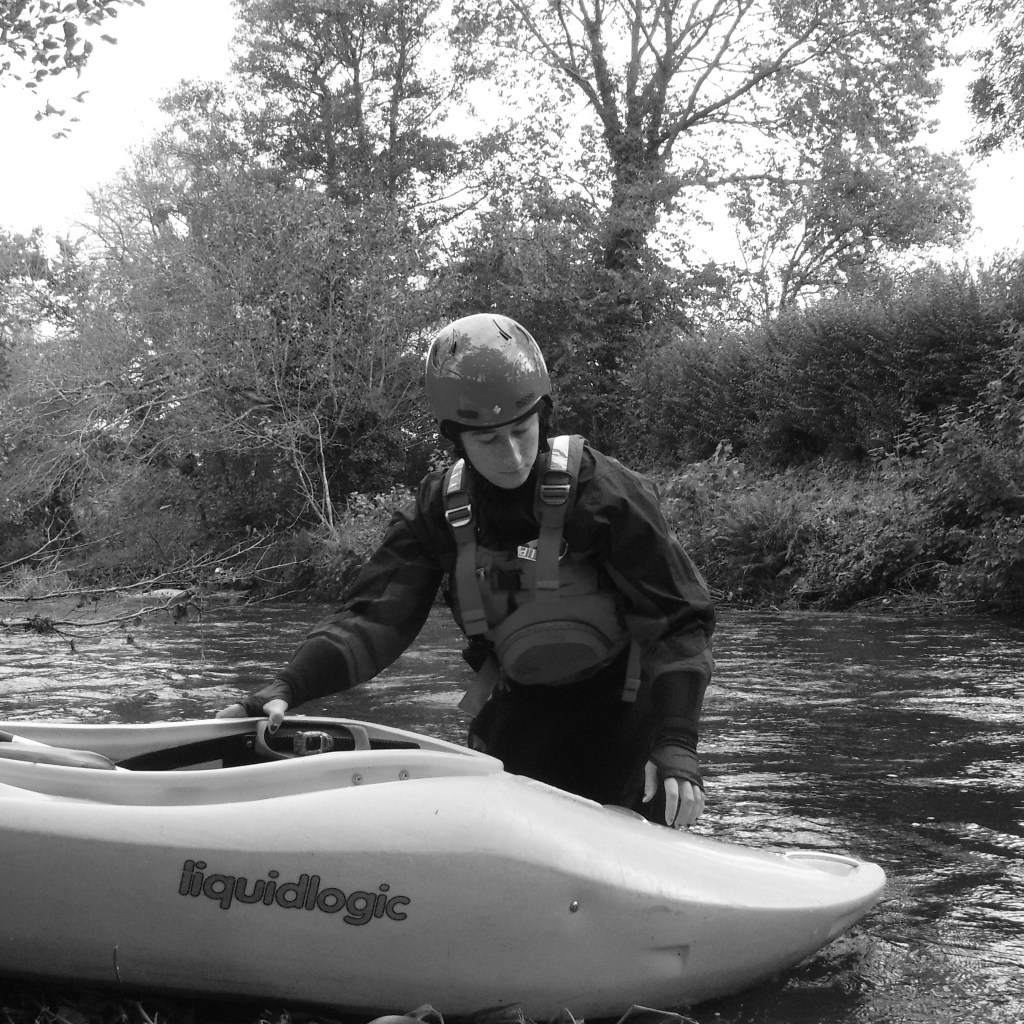
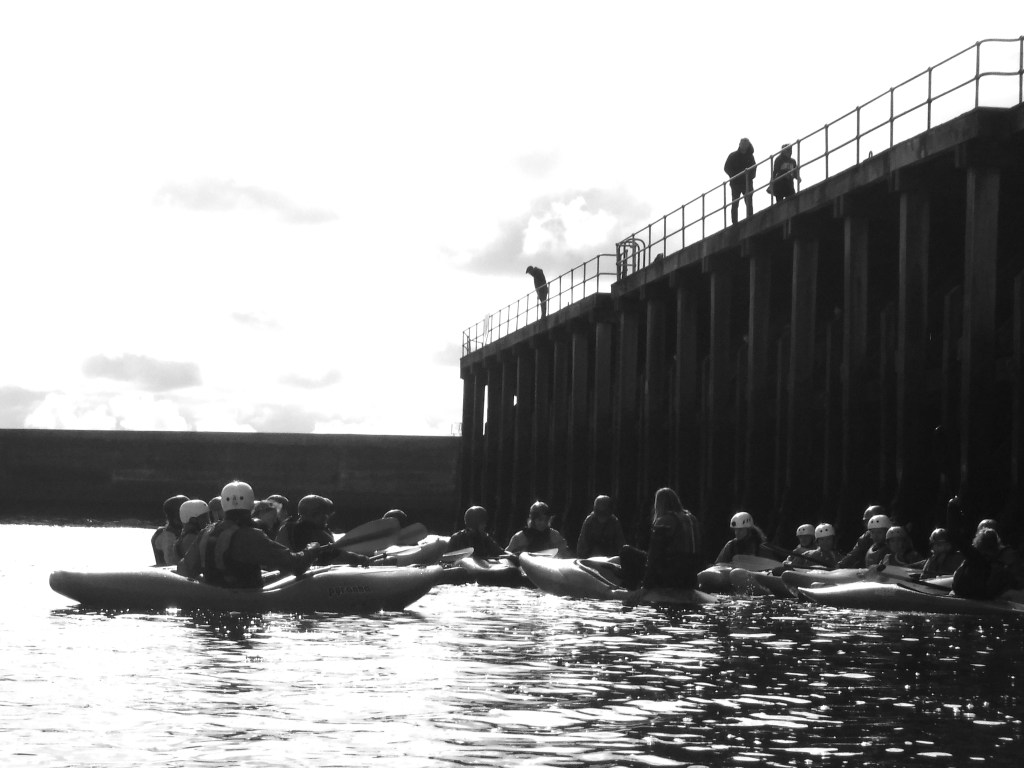
You’ll notice that my examples are in black and white. Most of my kayaking pictures are, and for that matter so is most of my work whether that’s film or digital. What I am photographing, mostly, is the people I am with. When I photograph people I am after pose, posture, expression, all of the things that colour will distract from. Which is unfortunate, because there’s plenty of colour. Kayaks come in a psychedelic array of reds, greens and oranges and kayakers come decked out in something similar in order to make them visible – it gives the Coastguard a convenient way to find the bodies. That’s why I’m working in black and white, at least for the moment.
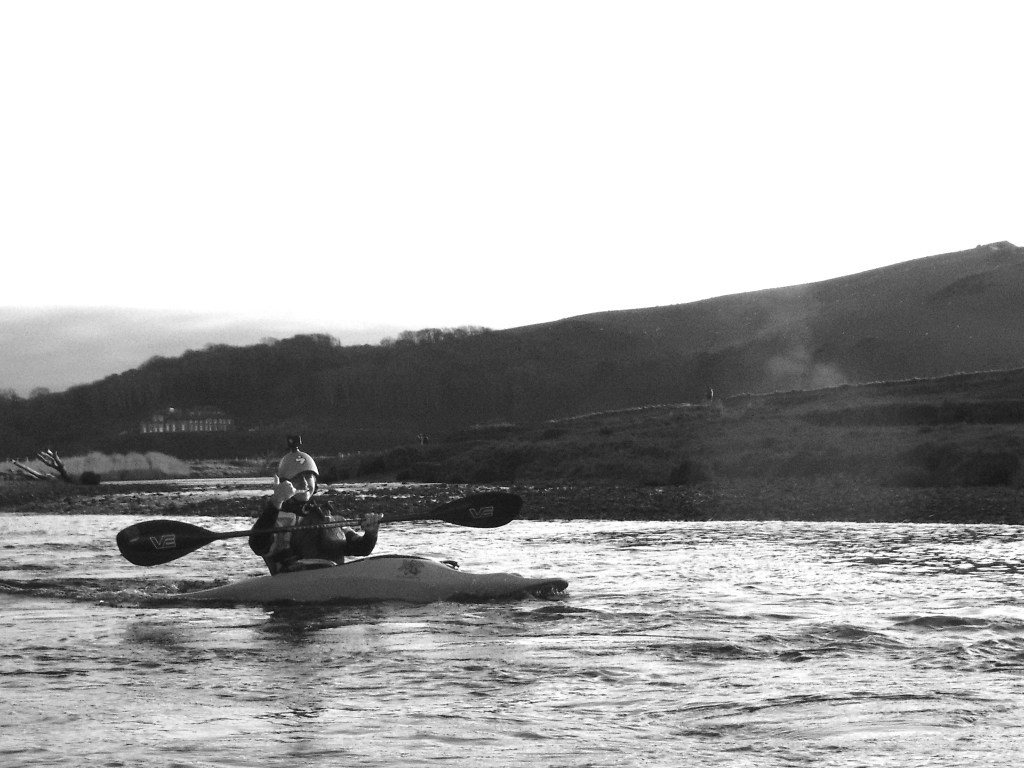
And how are they shot? It’s one of the things I like about a kayak versus a longboat that you can be your own man as you look for things to picture, much in the same way that an Aleut might scam the surface looking for things that are good to eat. The size of the Fuji helps there – no trouble in holding it one handed while my other arm holds my paddle or steadies me against the bank. The thing to bear in mind however is that the platform from which I am photographing will never be still – it skims lightly over the top of a moving surface Mobilis in Mobili. If I stop paddling then the current will take me where it will, or the river’s flow, or the wind. There’s times I can stop that – hang onto a handy rock or tree root, or ground myself on a sandbar for a minute – but there are others where I can’t. Regardless, a pretty sprightly shutter speed is called for – give it its due, the cameras onboard software will give it to me. And once back home….there’s more to do. I find I work with these images far more than I usually would, simply because the composition done hurriedly as my point of view revolves slowly in the current must needs be remedied with careful cropping.
So it goes. Boats, water, cameras, images. Nothing new. We’ll see what develops.

 Photos By Alex